
Inflatable Business Guide
Welcome to our Inflatable Business Guide page! This page provides general information about the inflatable industry, including inflatable types, maintenance tips, and business operations. Its goal is to give buyers and business owners a clear understanding of commercial inflatables and industry practices.
Inflatable Types and Grades
What is a commercial grade inflatable bounce house?
A commercial grade bounce house is an inflatable that is built for businesses like party rental companies or indoor play centers. These inflatables are larger, hold more riders, and are made with heavy-duty PVC vinyl, reinforced seams, and extra stitching in high-stress areas. This durability allows them to withstand frequent use and last for several years.
What is a residential grade inflatable bounce house?
A residential grade bounce house is an inflatable designed for personal use, either indoors or in a backyard. It is typically made from lighter oxford fabric rather than heavy-duty PVC vinyl, making it less durable than commercial models. Residential inflatables are smaller, usually accommodate a few children at a time, and are suitable for toddlers or kids up to around 8–10 years old. They generally last 6 to 18 months and are intended for personal, not commercial, use.
What is a hybrid Inflatable bounce house ?
A hybrid inflatable, sometimes called a crossover inflatable, is a newer type of inflatable that combines features of both commercial and residential models. It is usually constructed from a combination of lightweight PVC vinyl and oxford fabric, which helps reduce weight and cost. While not as durable as full commercial inflatables, hybrid inflatables are generally stronger and longer-lasting than typical residential models. They are best suited for personal use and are not recommended for commercial applications.
What is a wet or dry inflatable bouncer?
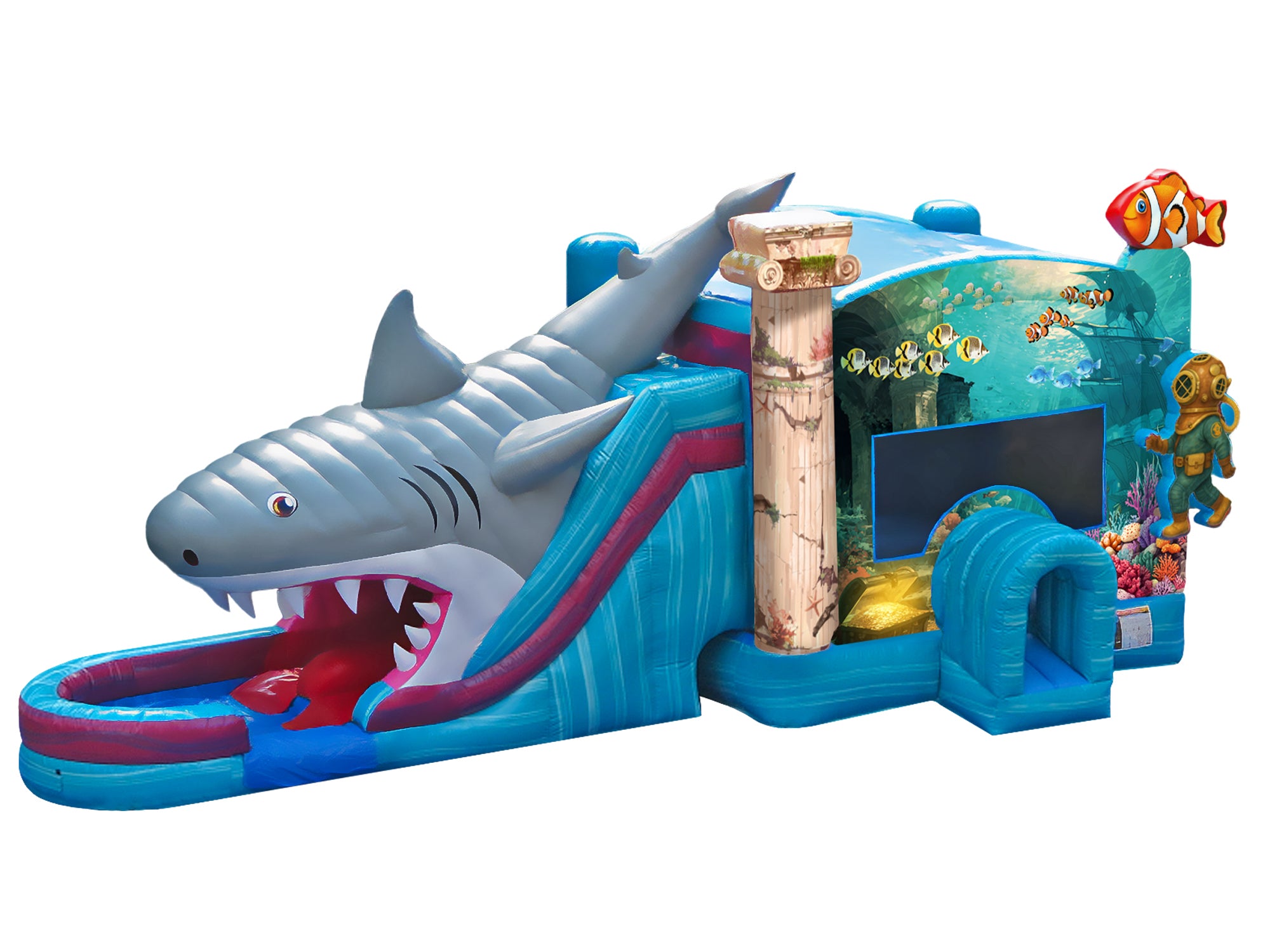
A wet or dry inflatable is an inflatable that can be used either with water or as a standard dry unit. These inflatables are popular because they offer more versatility and can be rented more frequently. Wet or dry inflatables often include safety features, such as non-slip surfaces in climbing or bouncing areas, and may have a removable or tuck-away pool. While they allow for increased use, wet or dry inflatables usually have a slightly shorter lifespan than regular dry inflatables. They are available in various types, including bounce and slide combos, standalone slides, and obstacle courses.
How thick is the vinyl of inflatable bouncers?
The vinyl thickness on commercial grade inflatables is most commonly 16 ounces today. Previously, manufacturers often used 18 ounce material, but lighter vinyl reduces the overall weight of the inflatable. Sections that are mostly decorative or not touched by riders may use 12 ounce vinyl to further decrease weight. Hybrid inflatables typically use lighter materials, such as 12 ounces or less, and are not suitable for commercial use. Thicker vinyl provides a protective barrier over the inner fabric, increasing durability and resistance to wear and damage.
Starting an Inflatable Business
Why start a bounce house rental business?
Starting a bounce house rental business can be a good opportunity because it is flexible and can be started at different levels. Some people begin with a small investment and a few inflatables, offering rentals on weekends, while others invest more to run it full time with additional equipment and staff. The business can grow depending on market demand or remain small and manageable. Many owners enjoy the work because each event creates fun for children and often for adults as well.
Is a bounce house rental business a full-time or part-time business?
A bounce house business can be either a full-time or a part-time business depending on the level of commitment. Some owners focus on the business full time and have grown it to generate millions of dollars in rentals annually. Others operate it part time, managing rentals on weekends while working a separate job during the week. The choice depends on your goals and how much time you want to dedicate to the business.
Should I obtain insurance when starting a bounce house rental business?
It is strongly recommended to obtain general liability insurance when starting or operating a bounce house business. Without insurance, you risk losing your personal assets if the business is ever sued. Operating without coverage may also limit your rentals to smaller backyard events. General liability insurance provides protection against potential claims and allows you to rent to larger venues such as local parks, recreation centers, and other event locations. The benefits of having insurance outweigh the risks of operating without it.
Should I set up an LLC for a bounce house rental business?
You do not need to form an LLC or corporation to start a bounce house business, but doing so offers important benefits. An LLC or corporation can help protect your personal assets if the business is ever subject to a lawsuit. Laws and regulations vary by city, county, and state, so it is recommended to consult an attorney or certified public accountant to understand the legal and tax advantages of forming an LLC or corporation for your business.
How many products are needed to start a inflatable rental business?
A bounce house rental business can be started with a small number of inflatables. It is generally recommended to have at least one or two products from each category, such as a basic bounce house, a combo with a climber and slide, a wet or dry slide, or an obstacle course. This provides clients with more options to choose from. While having more inventory increases the likelihood of rentals, it is usually best to start with a smaller selection to gauge market demand and expand your inventory as the business grows.
Inflatable Maintenance
Do I need to have my inflatables inspected before using them?
You do not need to have your inflatables inspected or approved before use in most states. However, some states, such as New Jersey and Pennsylvania, have specific regulations that business owners should be aware of before purchasing inflatables for their inventory. It is recommended to review the state department website and contact the appropriate authorities to understand the rules in your area. Manufacturers may not always provide accurate guidance, especially if they are new to the industry, so it is important to do your own research and confirm local requirements before making purchases.
How and where should you store a bounce house?
Bounce houses should never be stored while wet, as this can lead to mold and mildew. Make sure to thoroughly dry the inflatables before storing them, especially if they will be kept away for several weeks or months. Common storage locations for bounce houses include home garages, storage units, or warehouse facilities. The most important consideration is that the storage area remains dry and free from water leaks. If possible, it is also helpful to open and air out the units periodically during long-term storage.
How long does a bounce house usually last?
Commercial grade bounce houses can last for several years when properly maintained. Residential grade bounce houses generally last from a few months up to one or two years with proper care. The lifespan of a bounce house depends on factors such as the manufacturer’s quality, the thickness of the vinyl, and how well the product is maintained, including drying and proper storage. For example, a commercial grade bounce house that is well cared for can last five to ten years or longer, while the same product that is not properly maintained may need major repairs after only a few years.
Setup & Delivery
Can I set up an inflatable bouncy castle by myself?
Yes! Bounce houses and smaller inflatable combos or slides can typically be set up by one person in 15–30 minutes. Experienced operators may handle slightly heavier inflatables alone if they have the right dolly or vehicle. For larger or very heavy units, having one or two additional people is recommended to make setup and takedown faster and safer. Extra hands are especially important for inflatables weighing several hundred pounds.
What is the best dolly for moving inflatables?
The type of dolly depends on the size and weight of the inflatable. For smaller bounce houses, a standard two wheeled dolly with pneumatic or rubber wheels works well. For larger inflatables like combos or slides, a heavy duty dolly with four wheels or a braking system is recommended to handle the extra weight safely. Motorized battery powered dollies are also available and can make moving very heavy inflatables much easier.
What type of vehicle is best for delivering inflatables?
Several types of vehicles can be used to deliver inflatables. Common options include pickup trucks, cargo vans, SUVs, trailers, or box trucks. The best choice depends on the size and weight of the inflatables, the number of items you are transporting, and the conditions in your area. Smaller and lighter inflatables usually fit well in a pickup truck or cargo van. Larger or heavier inflatables may require a box truck or trailer. Ultimately, the right vehicle depends on your preference and how you want your company to appear when arriving at an event.
What kind of trailer should I use for delivering inflatables?
There are two main types of trailers used for transporting inflatables: open utility trailers and enclosed trailers. Open trailers are lighter and easier to tow, while enclosed trailers offer more security and protect inflatables from rain or weather. When choosing a trailer, consider the gross vehicle weight rating, coupler size, braking system, and whether your vehicle can safely tow it. You should also be aware of local laws and regulations regarding towing, as they can vary by area.
Pricing and Rental Tips
What price should I rent my inflatable for?
Pricing your inflatable depends on several factors. First, consider the location you are servicing and what your competitors charge for similar products. Next, think about your product and how it stands out from others in the market. Your pricing can also depend on your target clients. For example, backyard rentals for regular consumers may require lower prices or promotions, while corporate clients may pay more for the same product. Finally, consider your value proposition. If you provide better service, quality, or have strong reviews, you can justify charging slightly higher than competitors because you are offering more value.
What rents better, generic or themed inflatables?
Whether generic or themed inflatables rent better depends on your business and target audience. When starting out, generic inflatables are usually best because they appeal to a wider audience. As your business grows, clients may request specific themed inflatables, such as a Disney Princess bounce house, for their parties. Themed inflatables can command higher prices, but generic ones will not. The success of a themed product can vary by market and audience, so what rents best depends on who your clients are and how you market your products.
Have more questions?
Fill out the contact form below and let us know how we can help. Our team is here to support you in starting and growing your bounce house rental business with expert guidance tailored to your needs.